In today’s digital world, passwords are the first line of defense protecting everything from your email to your bank account. Yet, many people underestimate how vulnerable weak passwords can be. One of the most common techniques used by cybercriminals is Brute Force Attacks, a method that relies on persistence rather than sophistication.
Understanding how these attacks work and how to defend against them is essential for anyone using the internet.
What Are Brute Force Attacks?
At their core, Brute Force Attacks are simple: hackers attempt to guess your password by systematically trying every possible combination until they find the correct one. This process is usually automated using software that can test thousands or even millions of passwords in seconds.
Unlike more complex cyberattacks, brute force methods don’t rely on exploiting vulnerabilities in systems. Instead, they exploit human habits like using short, predictable, or reused passwords.
How Do Hackers Crack Passwords?
Hackers use a variety of strategies to make brute force attempts faster and more effective. Here are the most common techniques:
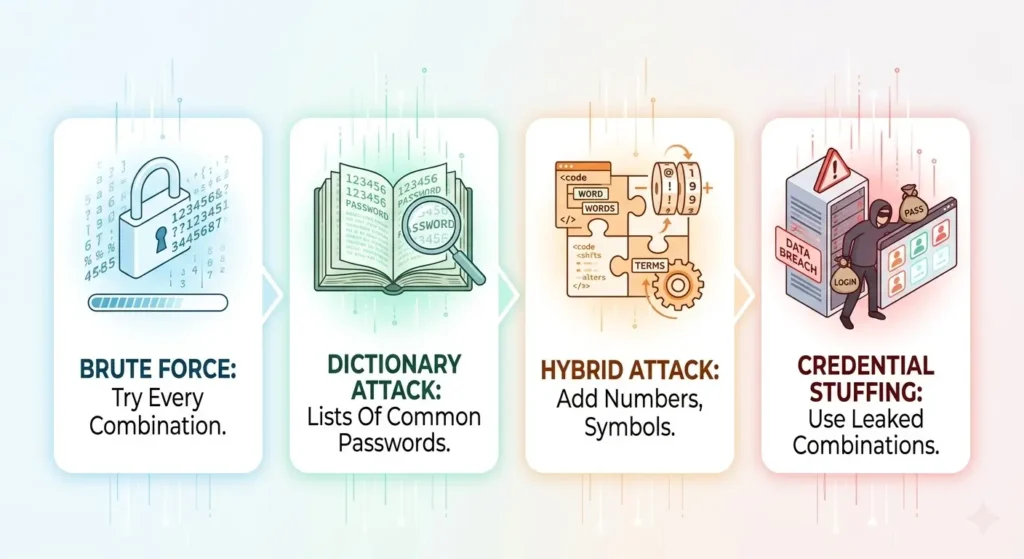
1. Simple Brute Force Method
This involves trying every possible combination of characters until the correct password is found. While time-consuming, it works against weak passwords.
2. Dictionary Attacks
Hackers use precompiled lists of common passwords such as:
- “123456”
- “password”
- “qwerty”
These lists also include variations like “Password@123” or “admin2024.”
3. Hybrid Attacks
A combination of brute force and dictionary methods, hybrid attacks modify common passwords by adding numbers or symbols.
4. Credential Stuffing
This technique uses previously leaked username-password combinations from data breaches to gain access to other accounts.
Why Are These Attacks So Effective?
Despite increased awareness, many users still:
- Use short passwords
- Reuse passwords across multiple sites
- Avoid special characters
This makes it easier for attackers to succeed. Even a moderately strong password can be cracked if it lacks complexity or uniqueness.
Signs You Might Be Under Attack
You don’t always see an attack happening, but here are warning signs:
- Multiple failed login attempts
- Account lockouts
- Unusual login locations
- Unexpected password reset emails
If you notice any of these, act immediately.
How to Prevent Brute Force Attacks
Protecting yourself doesn’t require advanced technical skills. Here’s a simple checklist:
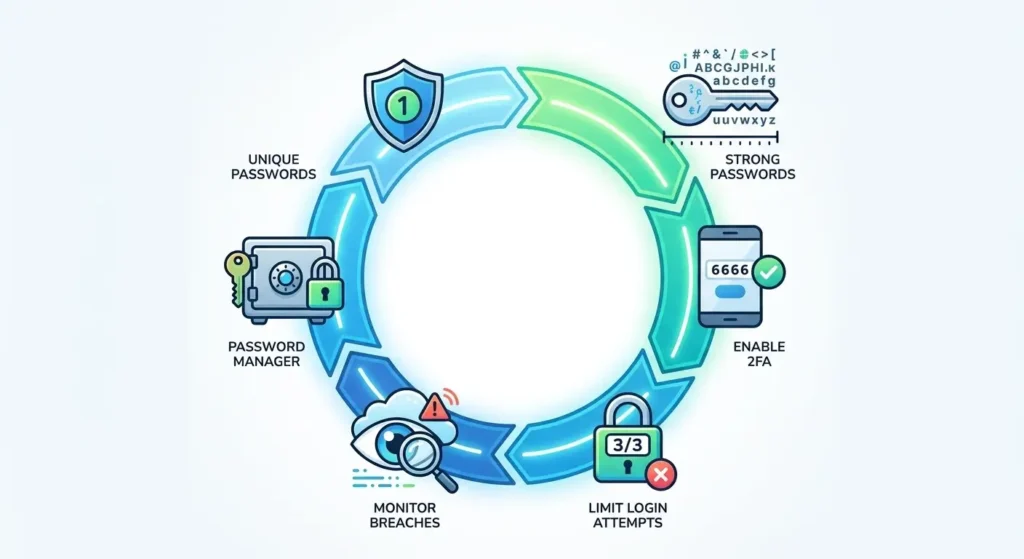
Use Strong Passwords
Create passwords with:
- At least 12 characters
- A mix of uppercase, lowercase, numbers, and symbols
Enable Two-Factor Authentication (2FA)
Even if a password is cracked, 2FA adds an extra layer of security.
Avoid Password Reuse
Use a unique password for every account.
Use a Password Manager
These tools generate and store complex passwords securely.
Limit Login Attempts
Websites and systems should lock accounts after repeated failed attempts.
Monitor for Data Breaches
Stay informed if your credentials are exposed online.
Quick Answer: Can Brute Force Attacks Be Stopped?
Yes,but not entirely eliminated. While you can’t stop attackers from trying, you can make it practically impossible for them to succeed by using strong security practices.
Real-World Impact
Organizations of all sizes have suffered from brute force incidents. From small businesses to large enterprises, weak password practices often lead to:
- Financial loss
- Data theft
- Reputation damage
This highlights the importance of cybersecurity awareness at both individual and organizational levels.
The Role of Automation in Attacks
Modern tools have made Brute Force Attacks more dangerous than ever. Hackers use bots and cloud computing to scale their efforts, making attacks faster and harder to detect.
This means even average users are potential targets—not just high-profile individuals or companies.
Future Trends in Password Security
As threats evolve, so do defenses. Here are some trends shaping the future:
- Passwordless authentication (biometrics, passkeys)
- AI-based threat detection
- Behavioral analytics for login monitoring
While passwords may eventually become obsolete, for now, they remain a critical part of cybersecurity.
Conclusion
In an era where digital security is more important than ever, understanding threats like brute force attacks is crucial. Whether you are an individual user or a business owner in Calicut, taking proactive steps can significantly reduce your risk.
Building awareness and adopting best practices can go a long way in safeguarding your data. Offenso Hackers Academy is dedicated to educating individuals and organizations about cybersecurity threats and defenses. Through expert training and practical insights, Offenso Hackers Academy helps you stay one step ahead in the evolving digital landscape.
Frequently Asked Questions
1. What is a brute force attack?
A brute force attack is a hacking method where attackers try multiple password combinations until they find the correct one.
2. Why do hackers use brute force attacks?
Because they are simple, automated, and effective against weak or reused passwords.
3. When do brute force attacks usually happen?
They can happen anytime but are common after data breaches when attackers have access to user credentials.
4. Where are these attacks most common?
They often target login pages of websites, email accounts, banking apps, and admin panels.
5. How can you protect yourself?
Use strong passwords, enable 2FA, avoid reuse, and monitor your accounts regularly.
